In the Garden
Kiunkaku, the only surviving villa among Atami’s former “Three Great Villas,” was completed in 1919 and cherished by three successive owners. Much of its splendor remains intact today, including its richly verdant garden.
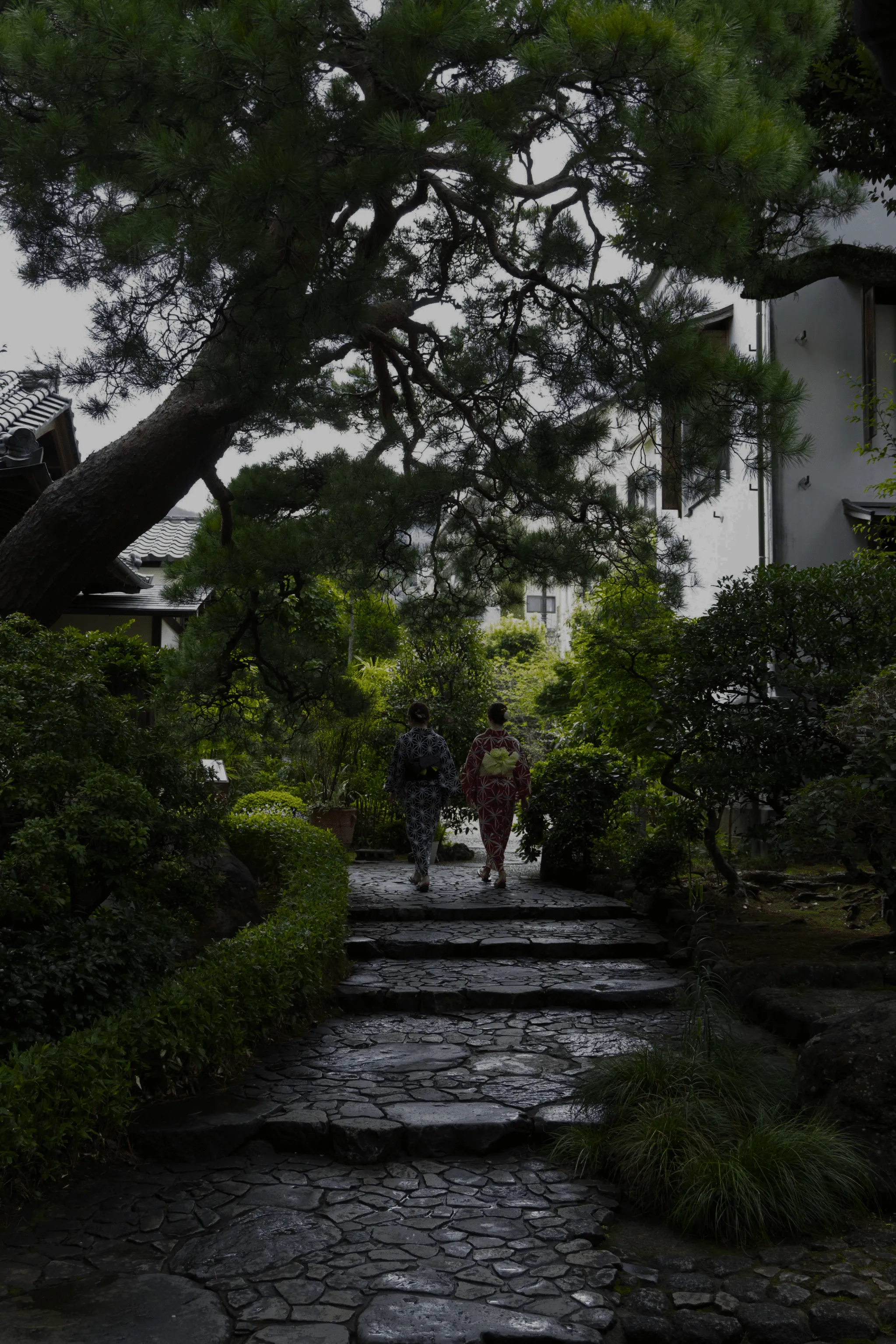
In 1925, the second owner of Kiunkaku, Kaichirō Nezu—founder of the Tobu Railway Group and known as the “Railway King”—purchased the villa and began developing its expansive 10,000-square-meter garden. A devoted tea practitioner, Nezu personally oversaw the garden’s creation, spending five years shaping it into his ideal landscape rather than leaving the work entirely to professionals.
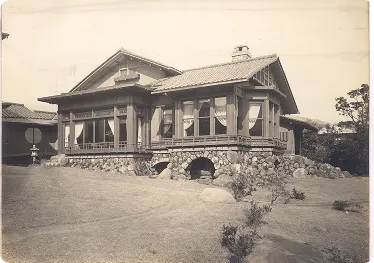
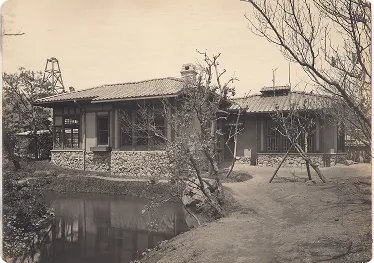
Kiunkaku and its garden at the time of construction
Photo courtesy of Shimizu Corporation
Nezu was especially particular about garden stones. He walked through the mountains of Izu himself, searching for stones that caught his eye. It is said that 70–80 stones were brought from Taga, another 50–60 from Mount Wada, and 70–80 more from the rocky shores of Manazuru. Izu stone, known for its durability and fire resistance, was widely used in the stone walls of Edo Castle. Even stones that were only half-split—still bearing the marks of wedges driven into their natural “grain”—were transported and placed throughout the garden. Among these stones, the most iconic is the massive “Nezu’s Great Stone,” weighing over 20 tons. According to accounts, more than a dozen gardeners spent over two months hauling it from near the Atami Plum Garden. The effort became such a topic of fascination that literary figures of the time wrote about it. In his 1927 diary, novelist Shōyō Tsubouchi recorded that the stone weighed “Hyaku man gan”—roughly 30 tons—exaggerated, perhaps, because of its overwhelming scale. When the stone passed in front of his house, he also wrote that it caused “great inconvenience, filling the entire road.” On another occasion, moving stones along what is now Route 135 created such a traffic jam that the head gardener was reportedly required to submit a written apology. Such episodes reveal both the passion and challenges behind Nezu’s vision—but it was precisely this devotion that shaped the garden we see today.
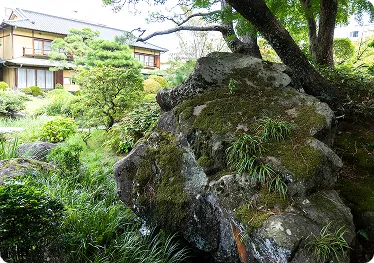
Nezu’s Great Stone
After the war, Kiunkaku was transformed from a private villa into a ryokan, and the garden continued to evolve with the times. Yet the Great Stone—sitting quietly by the stream at the garden’s center—remains unchanged, a symbol of Nezu’s unwavering aesthetic sensibility and the very “heart” of the garden.
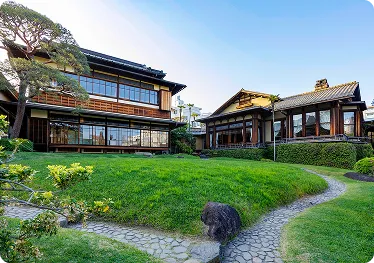
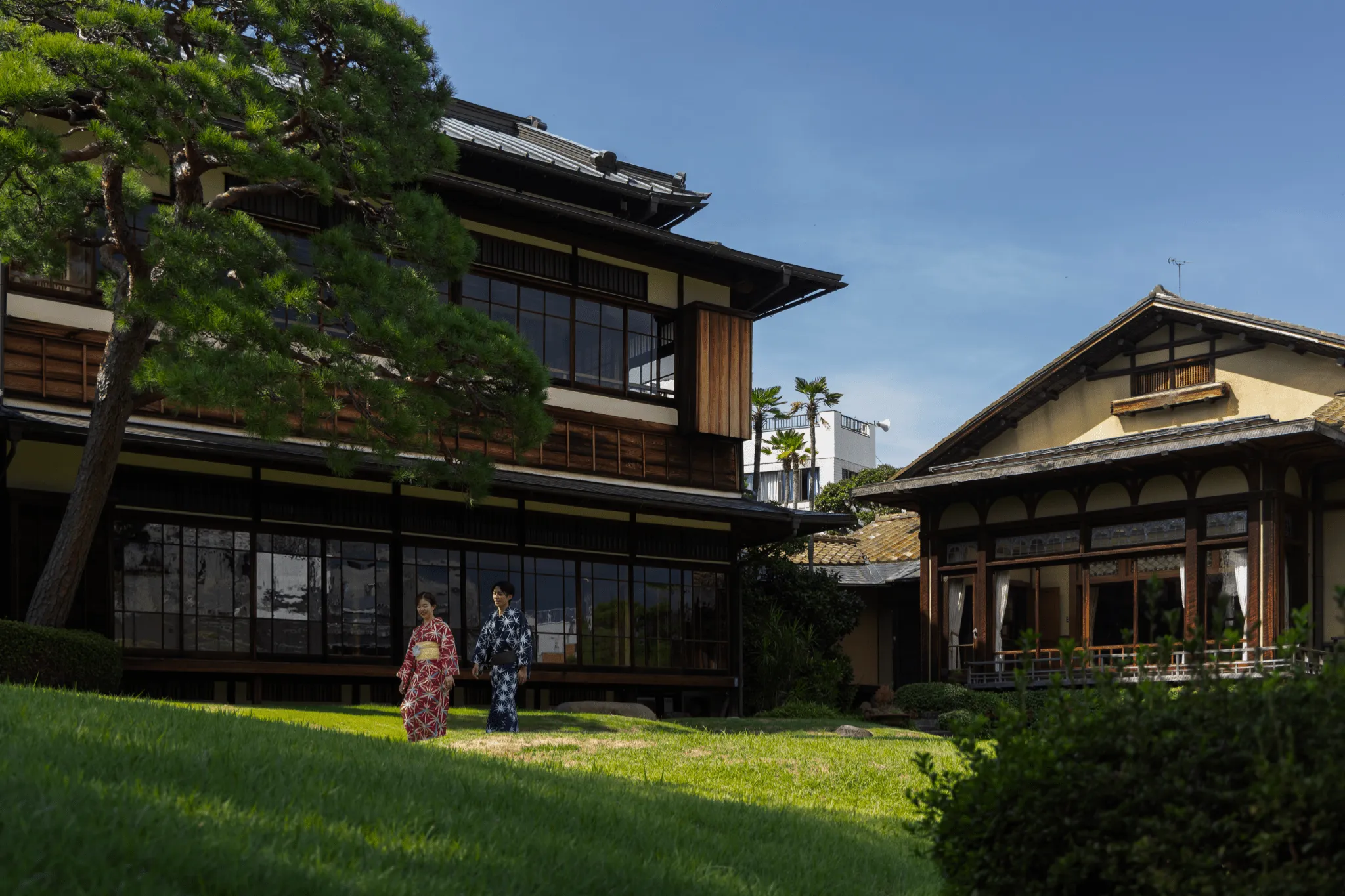
Kiunkaku and the Garden
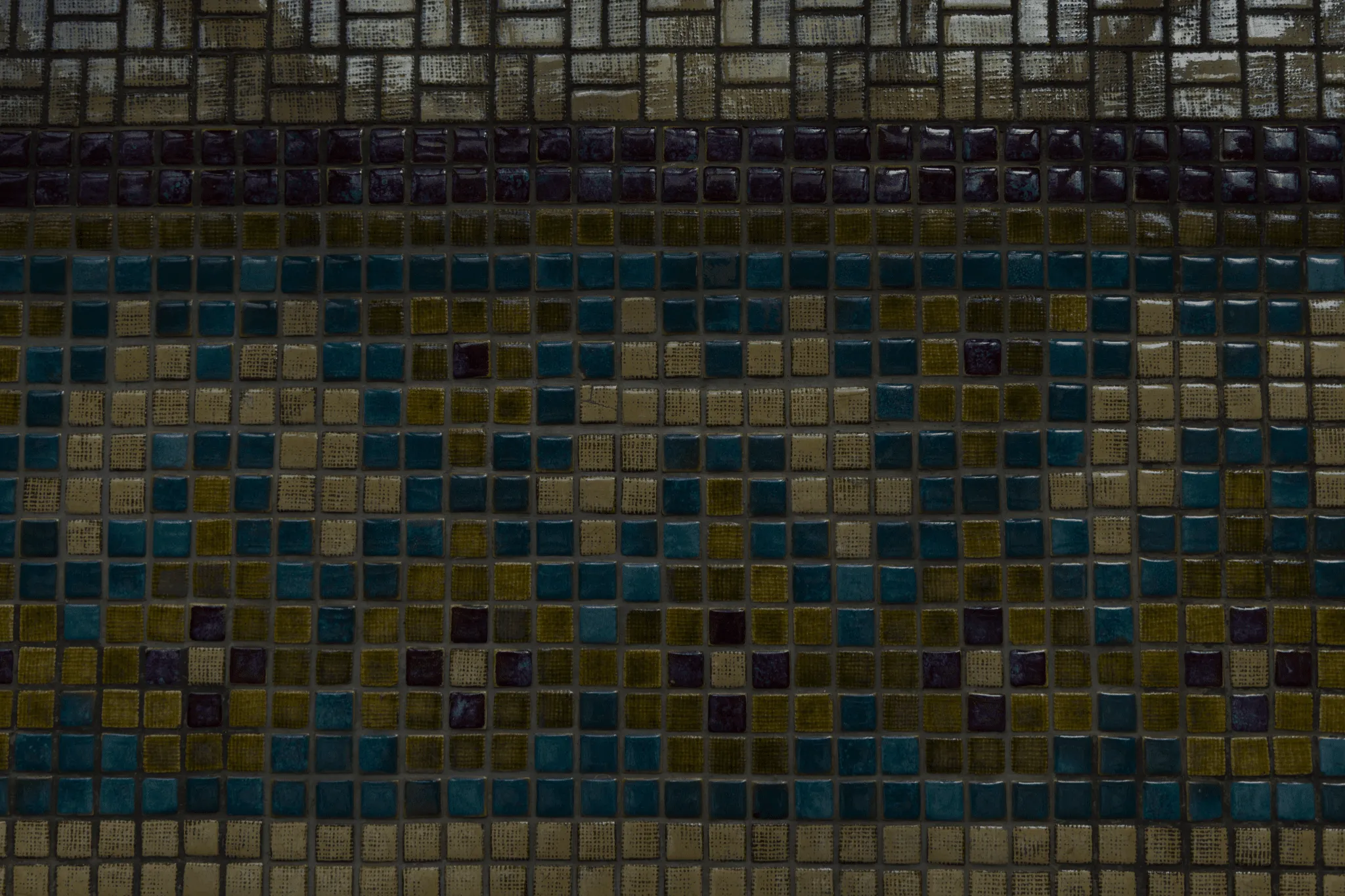
The buildings viewed from the garden are another highlight. The Japanese-style wing is roofed with copper plates—an expensive but fire-resistant material—while the Western-style wing features glazed ceramic tiles, whose colors shift subtly depending on the weather, whether sun, cloud, or rain. The grounds are also engineered with a delicate slope so rainwater never pools, and a variety of stone lanterns—including a five-story pagoda and yukimi-dōrō—are placed throughout. Each step offers a new perspective, and the garden reveals different expressions through changing seasons and light.
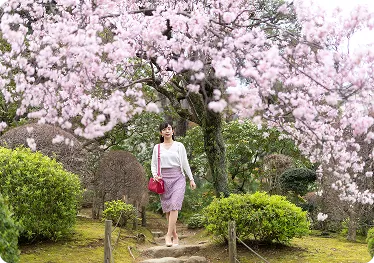
Cherry blossoms at Kiunkaku (late March)
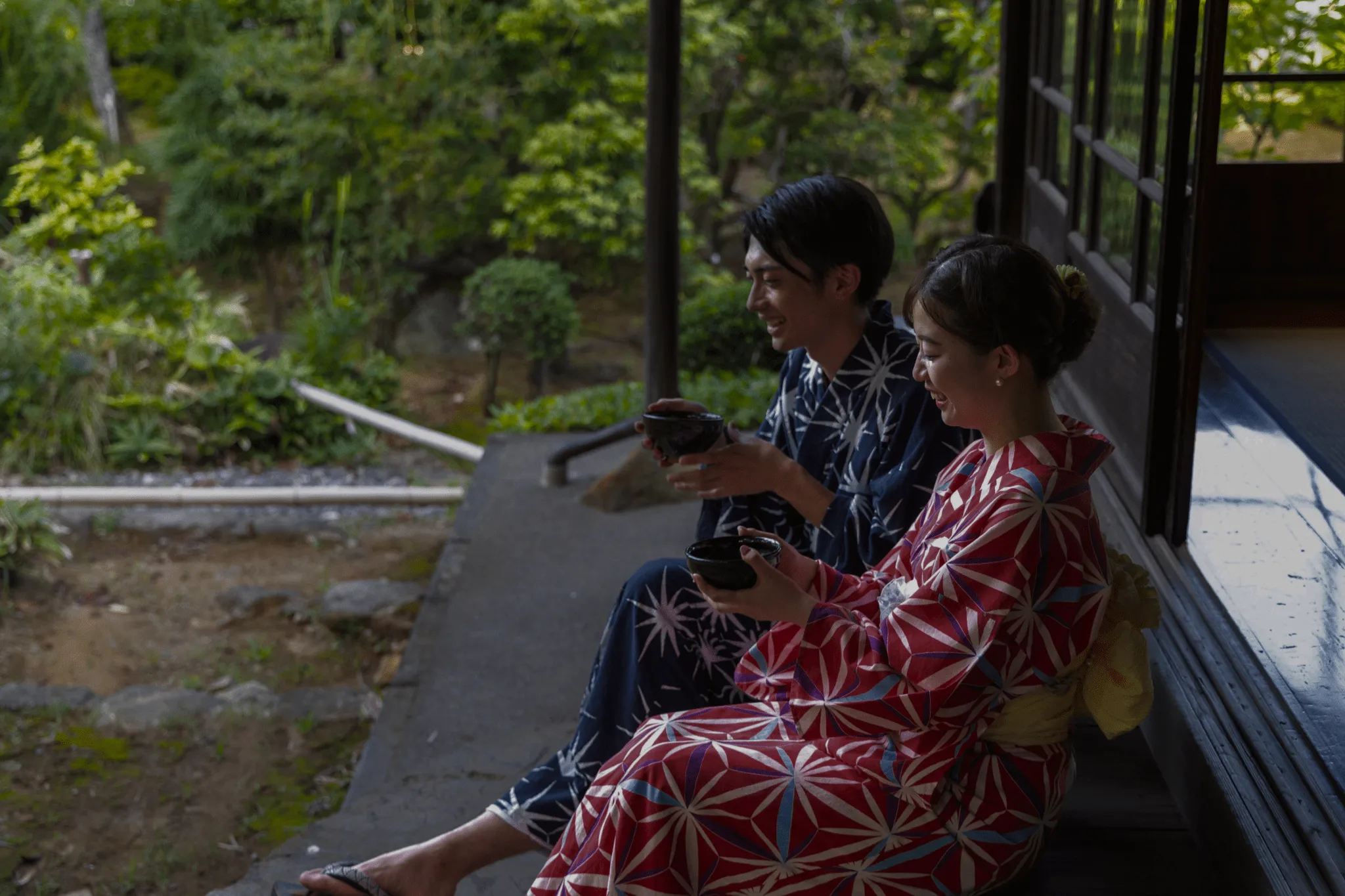
In spring, cherry blossoms; in autumn, vibrant foliage—the garden of Kiunkaku offers beauty in every season. Surrounded by lush greenery seldom found in the town center, visitors are invited to slow down and enjoy a moment of tranquility.