



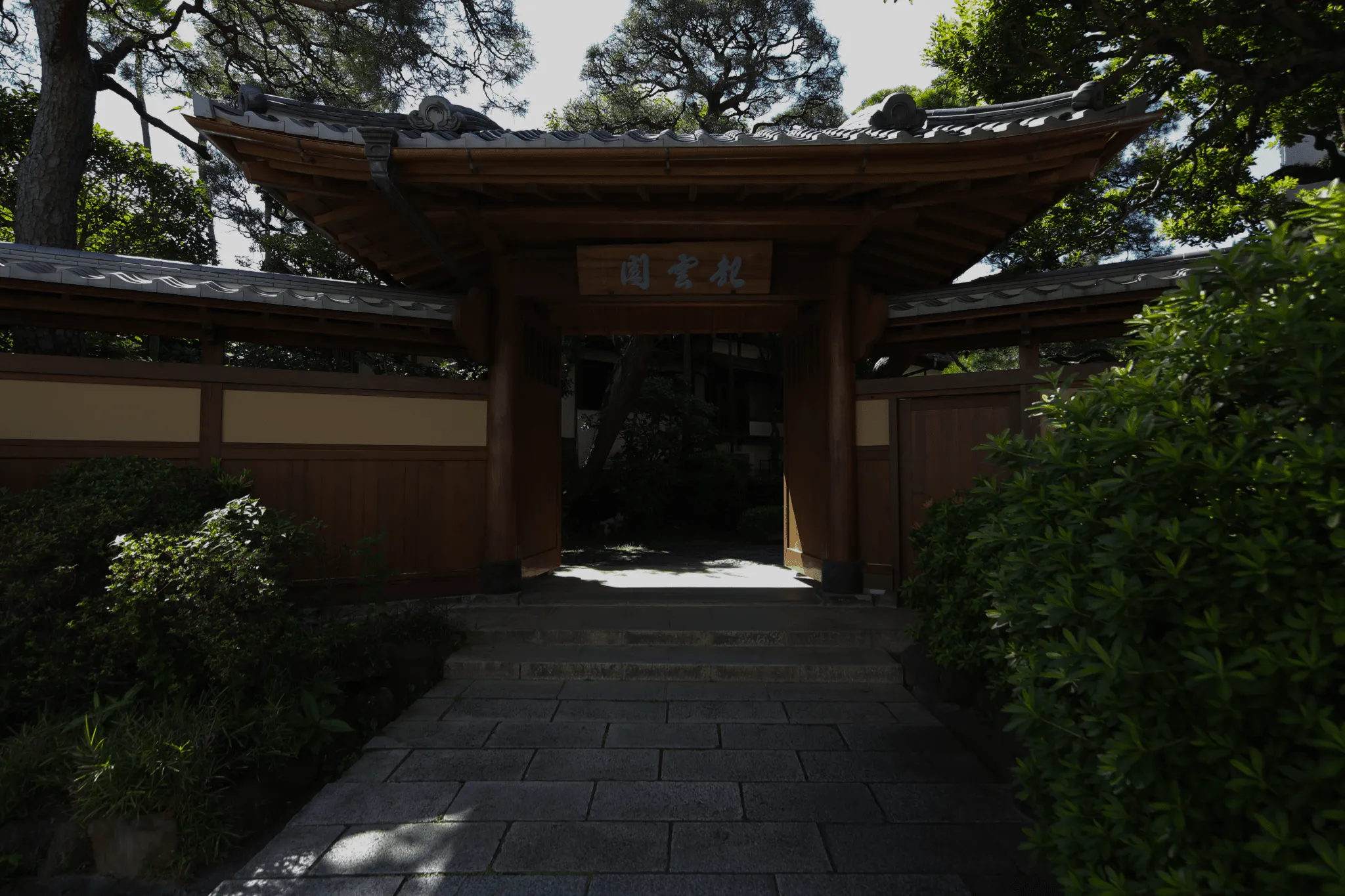
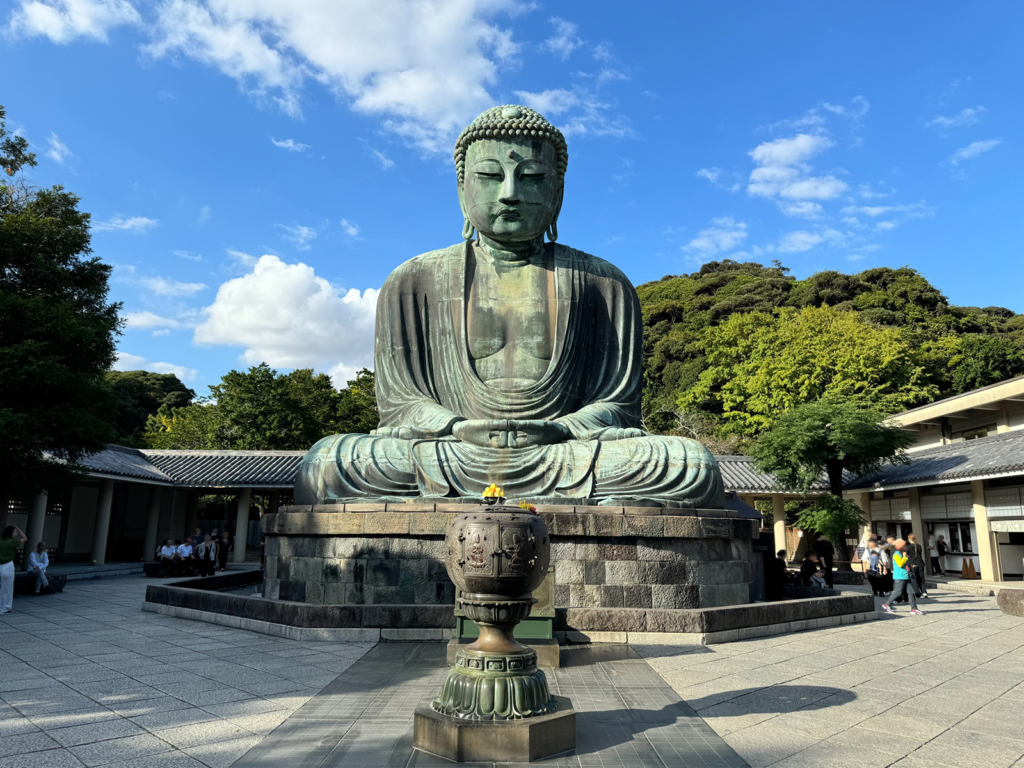
Recommended Getaway Near Tokyo: Kamakura to Atami
Just a short trip from Tokyo, Kamakura is one of Japan’s most popular historic destinations and can easily be visited on a day trip. With convenient access from Tokyo Station, the city offers a wealth of temples, shrines, scenic viewpoints, and photogenic spots steeped in history.
After a relaxed day exploring Kamakura on foot, why not continue your journey south by train along the coast to Atami?
Along the JR Tōkaidō Line, the sea opens up along certain stretches, offering small but memorable coastal views during the ride. If you transfer to the Shinkansen, you’ll arrive in Atami in about 70 minutes. Famous for its hot springs, Atami also boasts beaches, nearby islands, notable architecture, and nostalgic shopping streets—making it a well-rounded resort destination.
This suggested itinerary takes you from an ancient capital to a hot-spring resort, offering a journey through Japan’s history, culture, nature, and coastal cuisine. Why not enjoy a rich and rewarding stay that brings all of these together?
A Journey Where Tradition Meets the Modern: Exploring the Highlights of Historic Kamakura
Kamakura Station is less than an hour from Tokyo by JR train. With the sea to the south and mountains on three sides, Kamakura’s natural geography once made it a “natural fortress.” During the Kamakura period, it became the seat of the shogunate and the political center of Japan.
Today, the city is known for its powerful temple architecture rooted in samurai culture, as well as beautifully designed gardens. Though compact, Kamakura offers diverse areas—from temple districts and seaside viewpoints to lively terminal zones filled with cafés and shops. Enjoy wandering the town at an easy pace, discovering its many contrasting charms.
Tip: When sightseeing in Kamakura, the Enoshima Electric Railway (Enoden) is very convenient. The one-day unlimited pass “Noriorikun” allows unlimited rides and includes discounts at 55 participating shops.
Note: Same-day sales are temporarily suspended on Jan 10–12, Feb 21–23, and Mar 20–22, 2026.
| information | https://www.enoden.co.jp/en/ |
Sightseeing Spot ① Kamakura Kōkō-mae Railroad Crossing
A photogenic view of trains and the sea
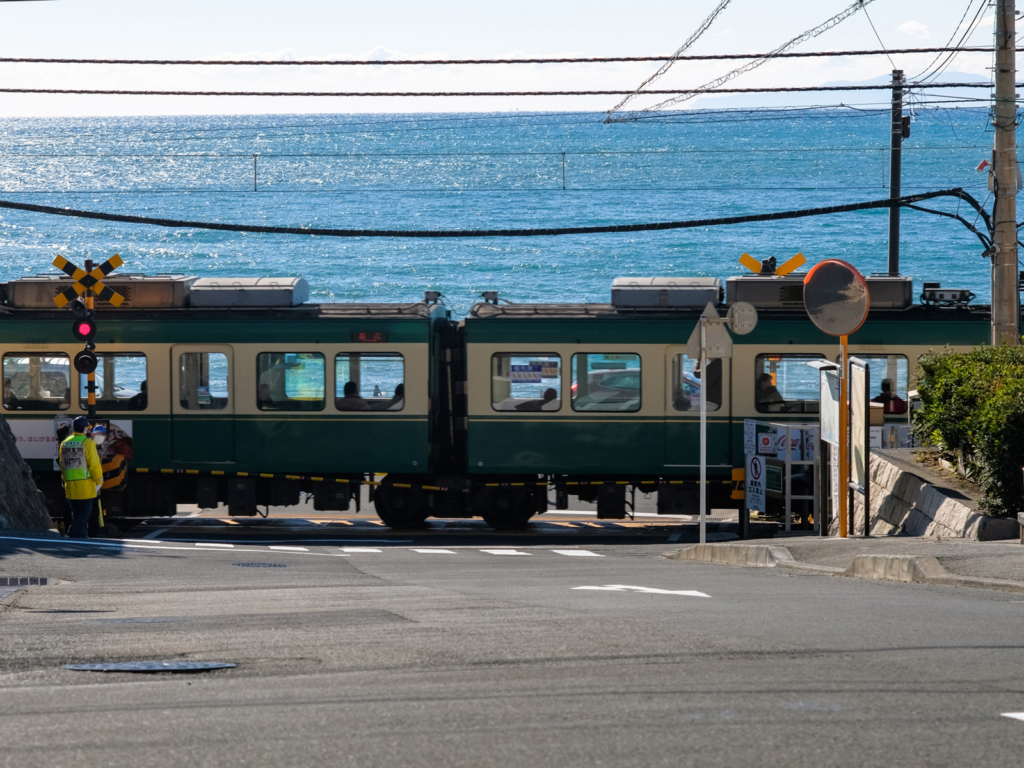
Start your Kamakura visit at one of its most iconic viewpoints. About 20 minutes from Kamakura Station by Enoden, Kamakura Kōkō-mae Station opens directly onto a sweeping ocean view. From the platform benches, you’ll enjoy front-row seats to the blue expanse of sky and sea.
| More Information | Enoshima Electric Railway Official Website |
| Nearest Station | A short walk from Kamakura Kōkō-mae Station on the Enoshima Electric Railway Line |
| Fare | From Kamakura Station to Kamakura Kōkō-mae Station: ¥260 |
| Operating Hours | Please check the timetable on the official website above |
| Map | https://maps.app.goo.gl/8bcxa5ZB22B9XYxt8 |
Just outside the station is a famous railroad crossing, known worldwide as the model for an anime opening scene. Capturing the train and ocean in a single frame, it has become a pilgrimage site for fans and photographers from around the world.
Sightseeing Spot ② The Great Buddha of Kamakura (Kōtoku-in)
A National Treasure standing serenely against the seasons
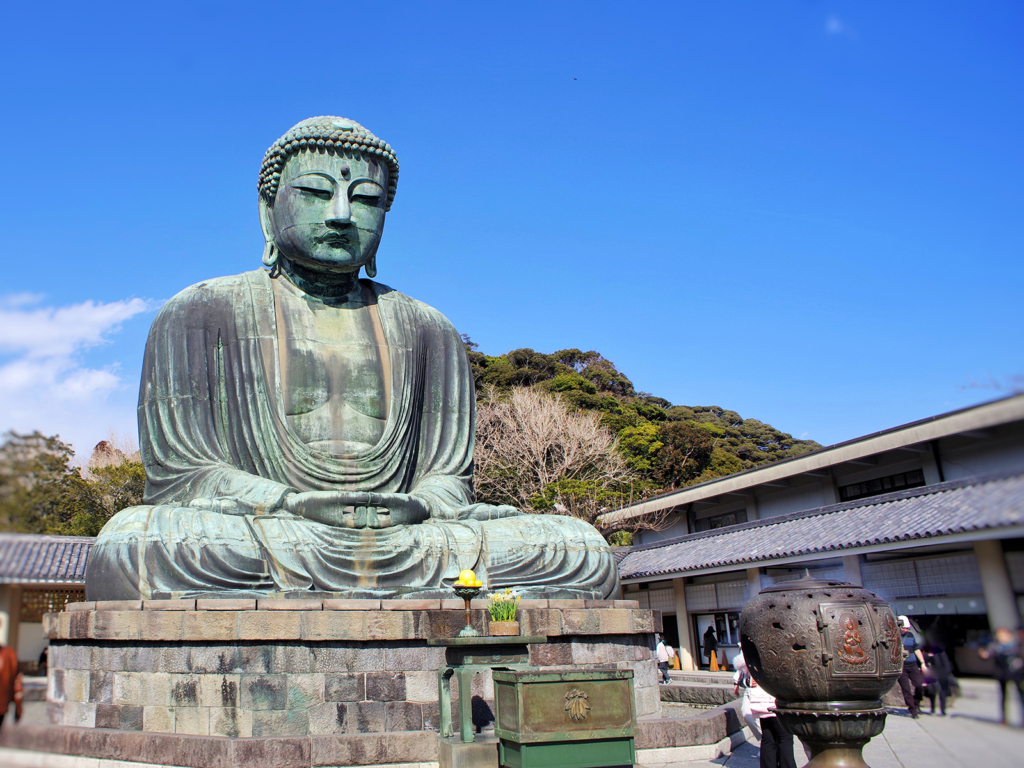
From Kamakura Kōkō-mae Station, continue to Hase Station. A short walk brings you to Kōtoku-in, home to the famous Great Buddha of Kamakura.
Standing 11 meters tall, this bronze statue was first cast around 1252 and is designated a National Treasure of Japan. Visitors may also enter the hollow interior, where casting windows and traces of original gold leaf reveal the craftsmanship of the era.
Originally housed within a hall, the structure was lost to natural disasters. For nearly 700 years, the Buddha has stood outdoors as an open-air statue. Framed by seasonal scenery, its calm, gentle expression continues to offer visitors a sense of peace and remains a symbol of Kamakura.
| Information | Kōtoku-in (Great Buddha of Kamakura) Official Website |
| Nearest Station | Approximately a 7-minute walk from Hase Station on the Enoshima Electric Railway Line |
| Admission Fees | Adults (Junior High School age and over): ¥300 Children (Elementary School): ¥150 Entry inside the Great Buddha (interior): +¥50 |
| Opening Hours | April–September: 8:00 a.m. – 5:30 p.m. (last entry at 5:15 p.m.) October–March: 8:00 a.m. – 5:00 p.m. (last entry at 4:45 p.m.) Inside the Great Buddha: 8:00 a.m. – 4:30 p.m. (year-round; last entry at 4:20 p.m.) |
| Map | https://maps.app.goo.gl/aLkgWTAcjGQkdu2g7 |
Sightseeing Spot ③ Tsurugaoka Hachimangū Shrine
A historic power spot connected to the shoguns
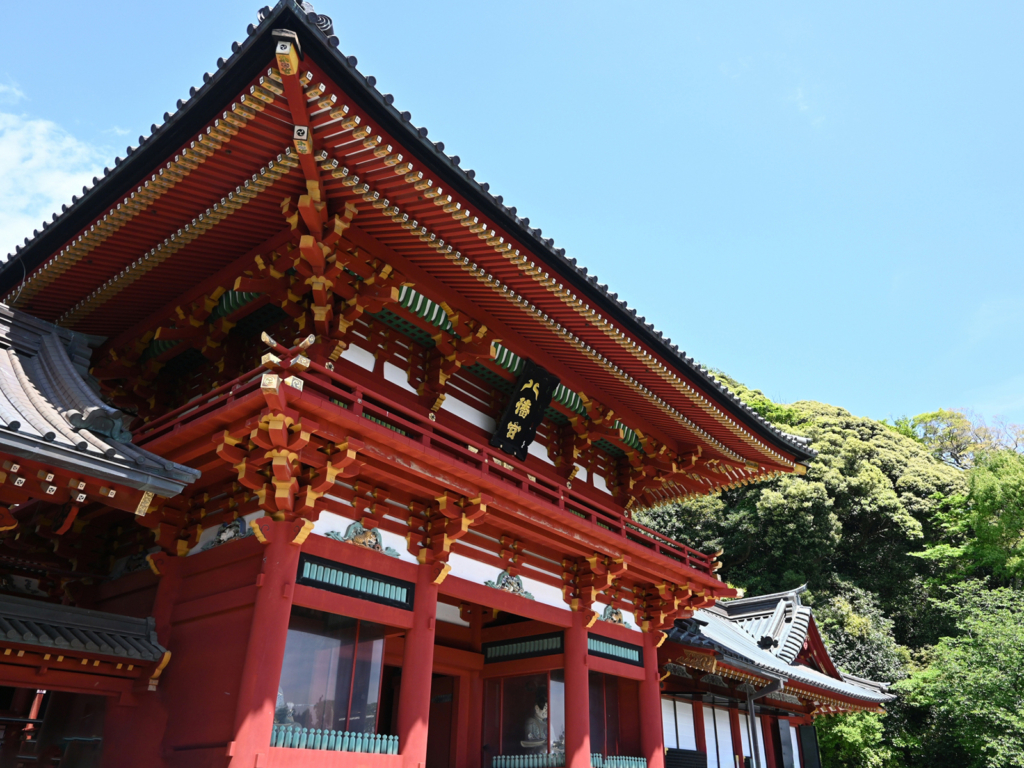
Conclude your Kamakura journey at Tsurugaoka Hachimangū. From Kamakura Station, a 10-minute walk brings you to its striking vermilion torii gate.
Closely associated with Minamoto no Yoritomo, founder of the Kamakura shogunate, the shrine is believed to grant blessings related to success, career advancement, safe childbirth, and good relationships. The spacious grounds include ponds, bridges, and museums, making it ideal for an unhurried stroll with café breaks along the way.
| Information | Tsurugaoka Hachimangū Official Website |
| Nearest Station | Approximately a 10-minute walk from Kamakura Station on the Enoshima Electric Railway Line |
| Admission | Entry to the shrine grounds is free. Some facilities require an admission fee. *Treasure Hall: Adults ¥200 / Elementary School Students ¥100 *Kamakura Bunkakan Tsurugaoka Museum: Adults ¥600 / Elementary & Junior High School Students ¥300 |
| Opening Hours | Shrine Grounds: 6:00 a.m. – 8:00 p.m. Facility Hours: Treasure Hall: 9:00 a.m. – 4:00 p.m. (Open daily; temporary closures may occur) Kamakura Bunkakan Tsurugaoka Museum: 10:00 a.m. – 4:30 p.m. (Closed Mondays; if Monday is a public holiday, closed the following day. Also closed December 29 – January 6.) |
| Map | https://maps.app.goo.gl/YTQyeNjiVydGq2wN8 |
Detour Spot: Komachi Street
Food and shopping along Kamakura’s liveliest street
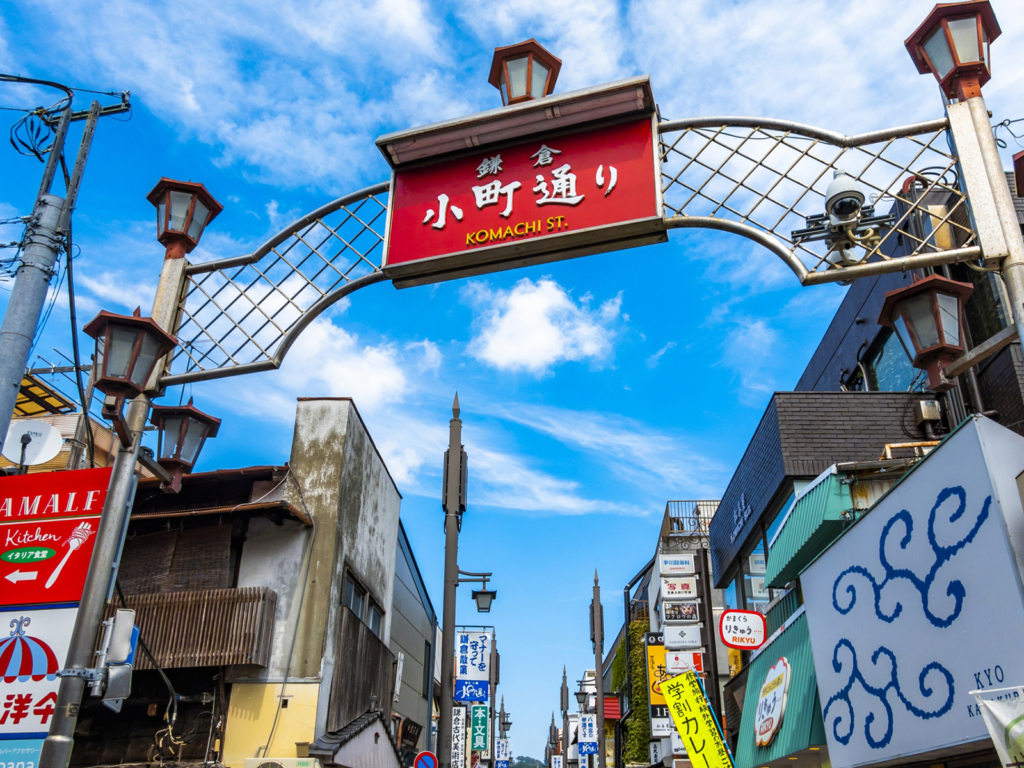
Running parallel to Wakamiya Ōji, Komachi Street is one of Kamakura’s most popular shopping areas. Lined with about 250 shops over 400 meters, it offers everything from Buddha-themed sweets and gourmet croquettes to photogenic dumplings.
Perfect for souvenir hunting, it’s an ideal stop after visiting Tsurugaoka Hachimangū.
| Information | Komachi Street Shopping District Official Website |
| Nearest Station | Approximately a 2-minute walk from Kamakura Station (East Exit) on the Enoshima Electric Railway Line |
| Admission | Varies by shop |
| Opening Hours | Varies by shop |
| Map | https://maps.app.goo.gl/RCvaMSmgSBJg2xSr7 |
From Kamakura to Atami: Recharge at a Hot-Spring Resort with Local Cuisine, Scenic Shrines, and Japanese Gardens
After an active day exploring Kamakura’s historic streets, why not spend the following day unwinding in the hot-spring resort town of Atami?
Traveling from Kamakura Station to Atami Station takes about 80 minutes with a train transfer, making it an easy and rewarding continuation of your journey.
Famous for its onsen culture, Atami offers much more than hot springs alone. Art museums showcasing Asian works, historic architecture, and multiple lively shopping streets fill the town with variety. Just outside the station, a free natural footbath invites visitors to soak their feet and relax before beginning their Atami exploration.
| IIeyasu no Yu Footbath Opening Hours | 9:00 a.m. – 4:00 p.m. |
| Admission | Free |
| Map | https://maps.app.goo.gl/Jon7JvbXgyUmRNAB8 |
| Recommended Train Route | JR Kamakura Station → Yokosuka Line to Ōfuna → Transfer to the Tōkaidō Line → Atami Station Fare: ¥1,170 Travel Time: Approx. 80 minutes |
*Original towels are available from vending machines for ¥200.
Atami Sightseeing Spot ①: Station Shopping Streets
Enjoy local flavors while strolling through two lively arcades
Upon arriving at Atami Station, begin your visit by exploring the two shopping streets located just outside the station: Heiwa-dōri and Nakamise-dōri. Lined with small restaurants, cafés, sushi counters, and dried-seafood shops, these arcades are perfect for sampling local cuisine and fresh seafood.
From classic Atami onsen manju to trendy sweets, comparing old favorites with new flavors makes strolling and snacking especially fun. Conversations with shop owners add warmth to the experience, offering a glimpse into the town’s welcoming spirit. Covered arcades also make this area enjoyable regardless of the weather.
| Information | Atami Tourism Association – Official Website |
| Nearest Station | Directly outside JR Atami Station |
| Admission / Hours | Varies by shop |
| Heiwa-dōri Shopping Street | https://maps.app.goo.gl/pMbjHXRoX1eKGdGJ9 |
| Nakamise Shopping Street | https://maps.app.goo.gl/q6fTXAy4pSMZb6rr7 |
Atami Sightseeing Spot ②: Izusan Shrine
Pray for good fortune and meaningful connections at a historic power spot
Next, visit Izusan Shrine, a sacred site closely associated with Minamoto no Yoritomo, the first shogun of the Kamakura shogunate. Said to have drawn the fortune that led to the fall of the Taira clan, the shrine is believed to bestow strong luck. It is also known as a powerful place for matchmaking, as Yoritomo is said to have deepened his bond with his wife, Masako, here.
From Atami Station, take a bus for about 7 minutes. After getting off at the Izusan Shrine stop, climb roughly 200 stone steps to reach the shrine grounds. From the elevated main hall, visitors are rewarded with sweeping views of Atami city and the sea. Those with time and energy may continue on foot toward the inner shrine, enjoying a scenic hike of about 60 minutes and panoramic views along the way.
| Information | Izusan Shrine Official Website |
| Access | Bus from JR Atami Station bound for Izusan Shrine / Get off at “Izusan Shrine” stop |
| Admission | Free Izusan Local History Museum: Adults ¥180 / Junior & Senior High School Students ¥120 / Free for elementary school children |
| Opening Hours | Shrine grounds open at all times Izusan Local History Museum: 9:00 a.m. – 4:00 p.m. (Closed Wednesdays) |
| Map | https://maps.app.goo.gl/8Us5Bz6BobGYEE1Q7 |
Atami Sightseeing Spot ③: Kiunkaku
Experience Japanese architectural beauty and East–West aesthetics in a historic villa
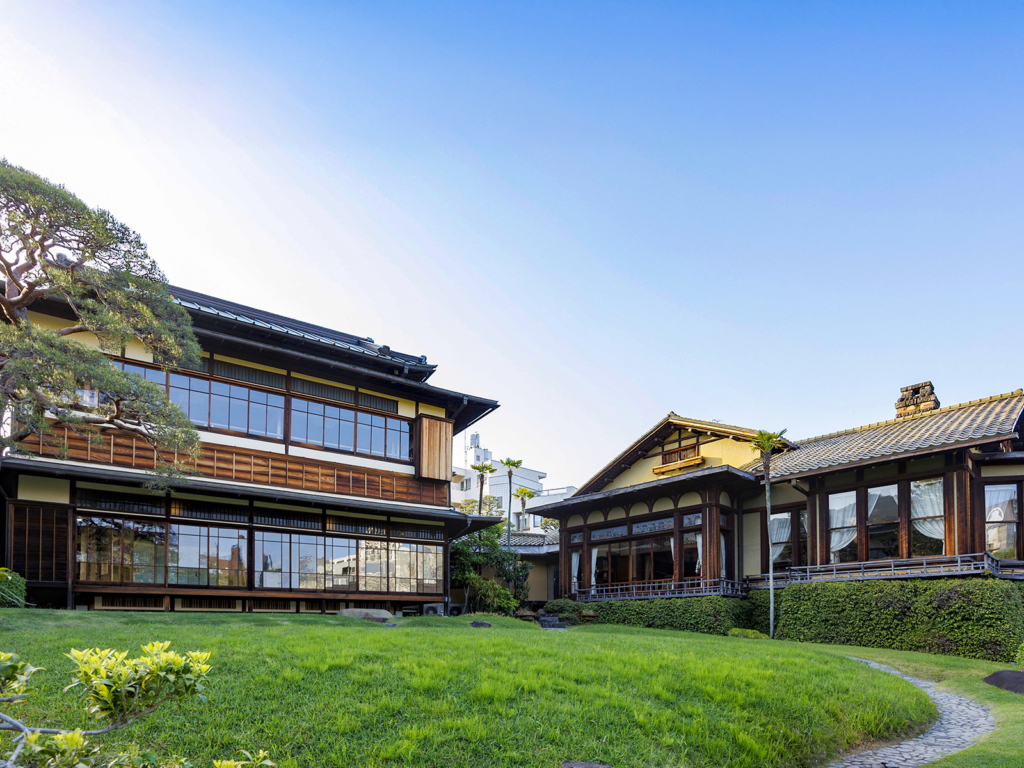
Return to the city center and conclude your journey at Kiunkaku, a historic estate beloved by literary figures. Built in 1919 as a private villa, Kiunkaku was celebrated as one of the “Three Great Villas of Atami.”
The estate features both Japanese-style and Western-style buildings, showcasing refined Japanese architecture alongside decorative influences from Europe and Asia. Having later served as a ryokan, each space reveals a distinct atmosphere, with discoveries and impressions deepening as you move through the property.
Set on approximately 3,000 tsubo (about 10,000 square meters), the grounds include a lush Japanese garden open for free exploration. Despite being in the city center, the garden offers remarkable tranquility. Listen to flowing water and birdsong, enjoy the slow passage of time, and capture nostalgic photographs in this serene setting.
| Information | Kiunkaku Official Website |
| Access | Approx. 21-minute walk from JR Atami Station From JR Atami Station Bus Terminal: Platform 1: Izu Hakone Bus (Ainohara Danchi / Ume-en / Shimizuchō Loop) Platform 2: Izu Hakone Bus (Sasaragadāi Danchi / Nishiyama / Hakone area) Get off at “Kiunkaku-mae” stop |
| Admission | Adults ¥610 / Junior & Senior High School Students ¥360 / Free for elementary school children Cash only |
| Opening Hours | 9:00 a.m. – 5:00 p.m. (Last entry at 4:30 p.m.) Closed Wednesdays (open if Wednesday is a public holiday) |
| Map | https://maps.app.goo.gl/YZ4ntD4z3V9eAyDt5 |
About the Japan Rail Pass
For international visitors, the Japan Rail Pass (JR Pass) allows unlimited travel on JR lines, including Shinkansen.
Prices (as of December 2025 / Ordinary Class)
| 7-day pass | ¥50,000 |
| 14-day pass | ¥80,000 |
| 21-day pass | ¥100,000 |
| Information | https://japanrailpass.net/about_jrp/ |
Note: The JR Pass cannot be purchased within Japan and must be bought online or through authorized agents before arrival.